

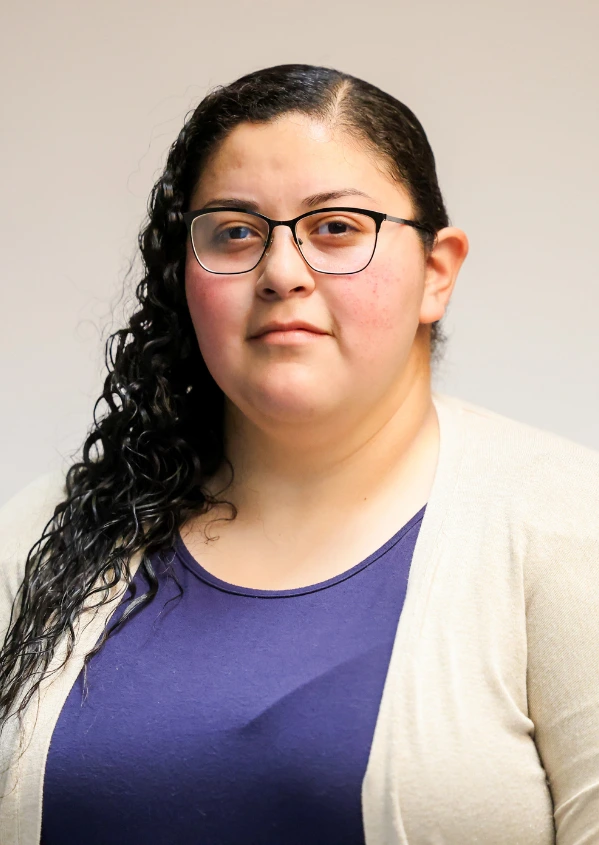
Floribel Chavez
McNair Scholar 2025
- Major(s): Spanish
- Classification: Junior
- Anticipated Graduation Date: Fall 2026
- Career Aspirations: After earning my bachelor’s degree, I plan to pursue graduate studies that nurture my passion for writing, culture, and education. My goal is to publish my own work and teach in schools or universities. I hope to explore creative and cultural fields while continuing to grow as both a writer and an educator. More than anything, I’m driven by a love for storytelling, a connection to my roots, and a desire to make a difference.
“The McNair Program challenged me more than I expected, boosting my confidence as both a scholar and an individual. Through research, I found that each discovery led to new questions, deepening my curiosity. Mentors like Victoria, Kirbi, and Dr. Eduardo Huaytán-Martínez helped me realize that my dreams are bigger and more attainable than I once thought. Simply being part of this prestigious program has made me feel like I truly belong in academic spaces, and capable of achieving more than I imagined.”
“Trauma Between the Pages: Inheritance, Repression, and Reimagining in Hispanic and Latine Literature”
Faculty Mentor: Dr. Eduardo Huaytán-Martínez
This study explores how trauma is inherited, repressed, and reimagined across generations in Hispanic and Latine literature, through Cristina García’s Dreaming in Cuban, Junot Díaz’s The Brief Wondrous Life of Oscar Wao, and Judith Oriz Cofer’s Silent Dancing. Drawing on Jeffrey Alexander’s theory of cultural trauma and Marianne Hirsch’s concept of postmemory, it examines how exile, dictatorship, and migration leave emotional residues that echo within family structures and silences. Across these texts, trauma functions as both burden and inheritance, passed not only through words but through gestures, memories, and the spaces between them. Yet each work also reveals the transformative power of storytelling–how art, narrative, and hybrid form can convert repression into expression. By illuminating how Latine authors use form to make silence speak, this study positions literature not merely as a reflection of generational pain but as a site of renewal, where the unspoken can finally find voice.