

Xeriscaping is More Than Rocks and Cacti: Save Time, Money, and Water
Author: Kenneth Leitch, PhD, PE, Professor of Civil Engineering, West Texas A&M University
Date: Sep-01-2026
Dr. Kenneth Leitch, Professor of Civil Engineering at WTAMU, relates perspectives on xeriscaping and how citizens, businesses, and governments can use these principles to save time, money, and water in the long term. The ideas here require thinking beyond the conventional turf lawn that dominates popular culture.
In a prior article entitled Citizen Precipitation Measurement is for All, rainfall measurements taken in Canyon, Texas from 2010 to 2024 were presented. Precipitation is erratic and highly variable in this region between mountains and deserts to the west and low plains and forests to the east. In that time frame, precipitation was as low as 5 inches (130 mm) in 2011 to 32 inches (810 mm) in 2015. Canyon is in the greater Amarillo metropolitan area which in turn is part of the vast High Plains Region of central North America. This region is denoted as Ecoregion #25 in Figure 1 by the US Environmental Protection Agency (EPA).
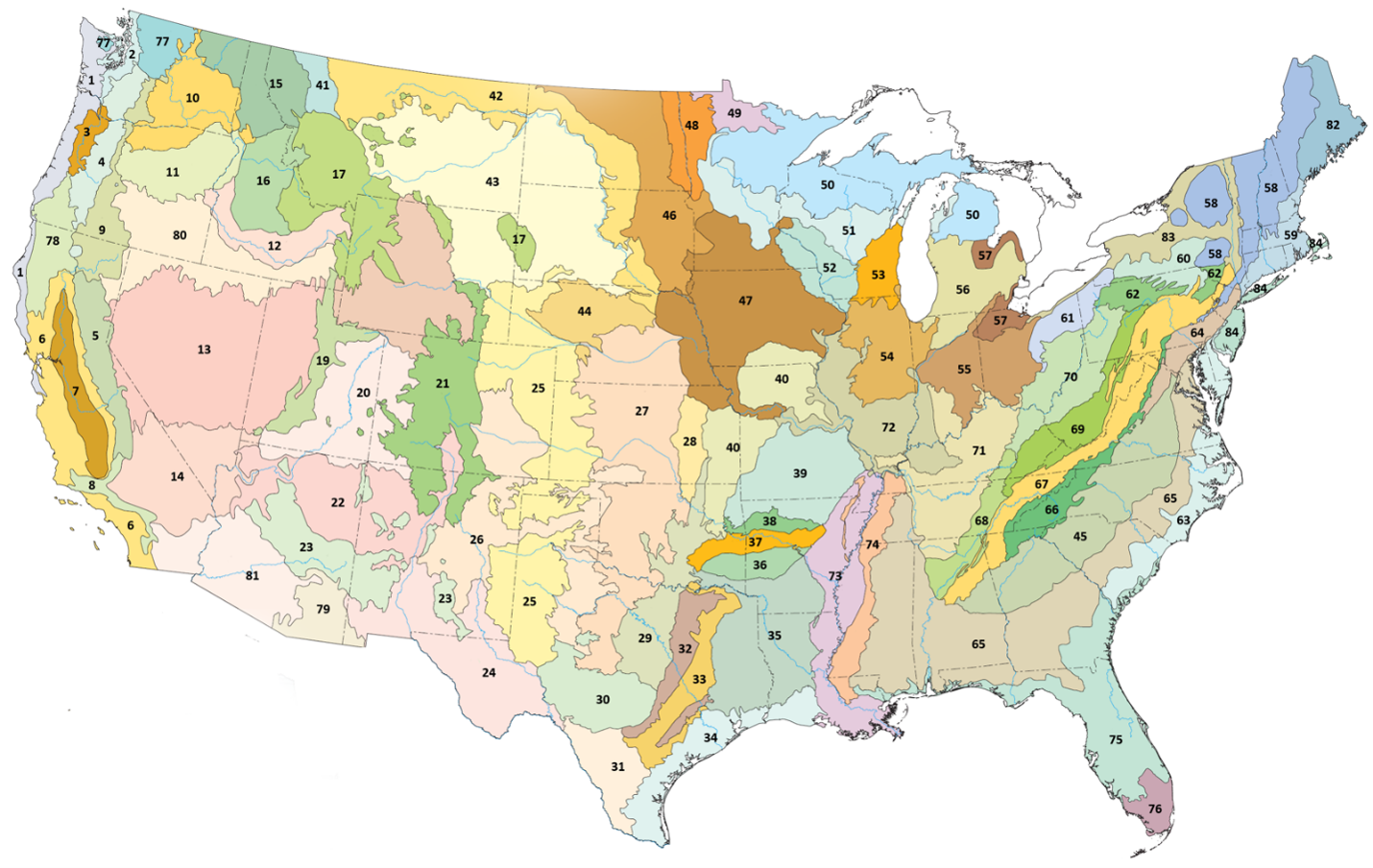
Ecoregion #25 (High Plains) is a cold semi-arid climate (Koppen Bsk) which generally receives 10 to 20 inches (250 to 500 mm) of precipitation annually, which is well below the evaporation potential of about 65 to 70 inches (1650 to 1780 mm) per year for the Amarillo metropolitan area. This is due to intense sunshine and one of the windiest regions in the United States.
Many cities in the western United States have adopted landscaping rules and incentives for reducing the planting of turf, trees, and shrubs that require large amounts of water to live. A cursory review of regional cities shows incentives for citizens, businesses, and governments to conserve water for landscaping. These include El Paso, Texas; Albuquerque, NM; Denver and Colorado Springs, CO; Las Vegas, NM; Phoenix, Tucson, and Scottsdale, AZ; and many more. Many of these incentives are based on area of turf removal from lawns.
Using data from city water utilities, the average water user in Amarillo consumes about 222 gallons per day (gpd); however, businesses are not separated out so residential use may be somewhat less. For comparison, the city of Albuquerque had an average household usage of about 250 gpd in 1994 which declined to 119 gpd inn 2019, as a result of incentives and laws in regard to water usage. Water usage in Lubbock, TX which is very similar climatically to Amarillo is 134 gpd, as reported by the Lubbock Avalanche-Journal. Hyperlinks to each city’s water conservation websites are here: Amarillo and Albuquerque. The cities of Amarillo and Canyon are nearing mandatory water restrictions as of the time of publication of this article in September 2026.
Dr. Leitch believes in leading by example. Persuasion, incentives, and legislation each have their place and that legislative action will not be a part of this discussion, as it is something for open discourse with citizens and their elected officials. As such, description of experience with xeriscaping will be informational rather than as a mandate to the reader.
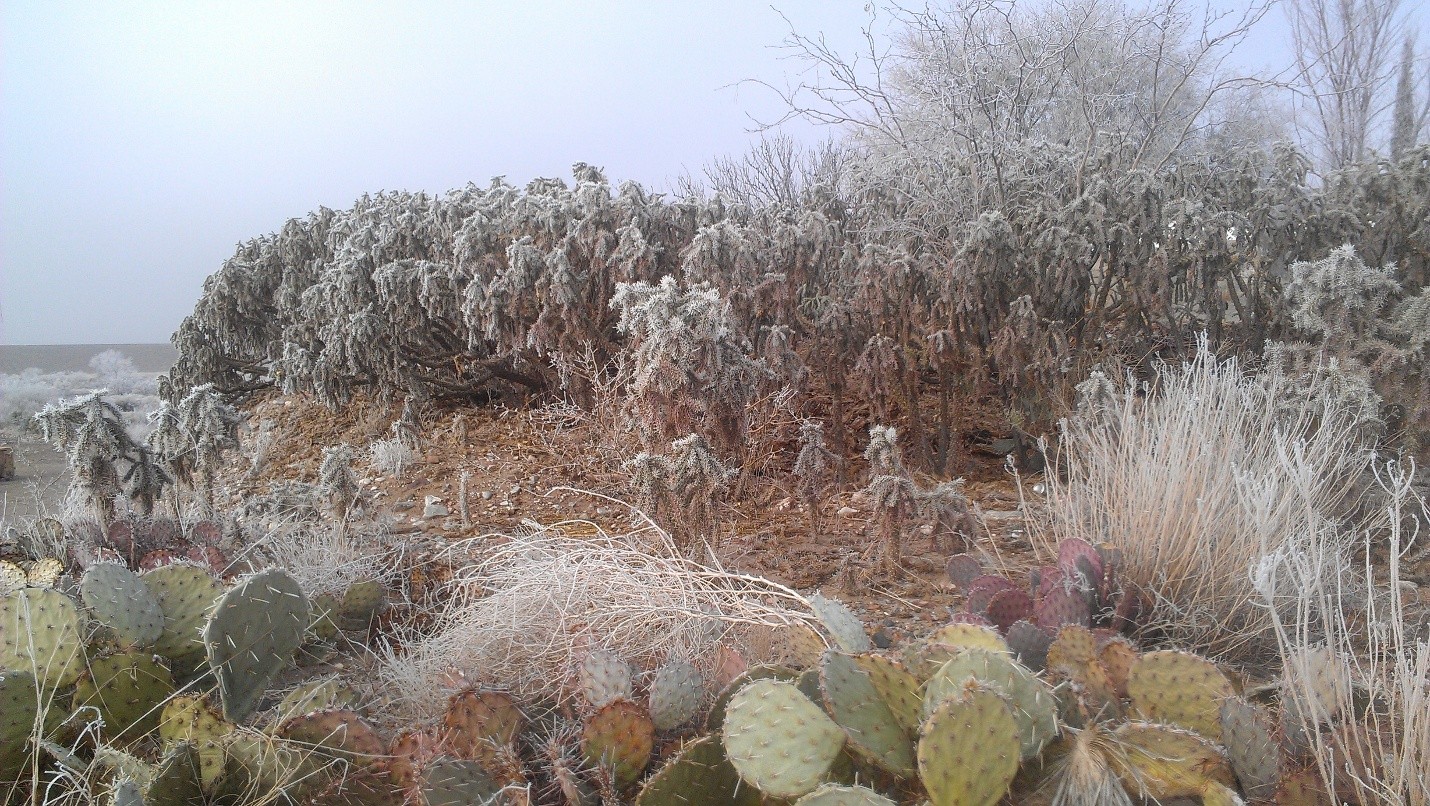
Dr. Leitch grew up at a time when the city of El Paso (hometown) enacted a comprehensive water conservation program. The city gets about 9 inches (230 mm) of precipitation per year and is in Ecoregion #24 (Chihuahuan Desert). Deserts generally receive under 10 inches (250 mm) per year. The photo in El Paso below demonstrates what most people will associate with xeriscaping: rocks and cacti. It also shows frost and that these plants are actually quite hardy for hot and cold days. Cholla cactus and prickly pear cactus are prominent and can rapidly propagate.
Upon purchasing a home in Canyon, Texas in 2015, Dr. Leitch was dismayed by the multiple-hundreds of dollars worth of water necessary to keep a fescue lawn in the front and back of a typical tract style home alive. Tall fescue is not native to North America, originating in Europe. It is also not good grazing for cattle and horses due to toxic fungus the lives on the plant. The most common fescue cultivar is Kentucky 31.
The native grass on the High Plains is the highly drought tolerant buffalo grass. While it is low maintenance, it grows very slowly, requires full sun, does not handle foot traffic, and is dormant much of the year. Bermuda grass is a good substitute since it is heat and drought tolerant but it requires frequent mowing and spreads aggressively with runners.
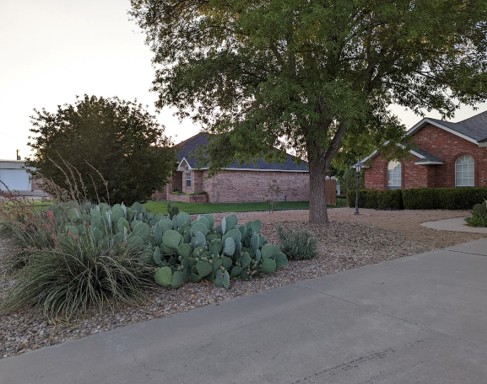
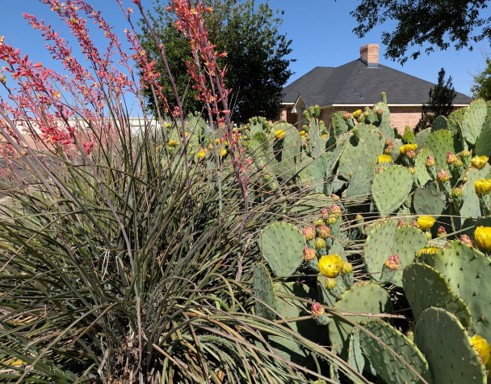
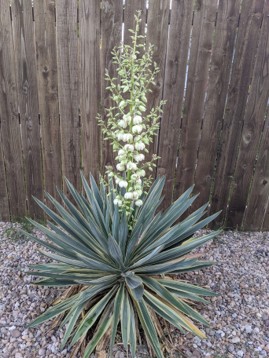
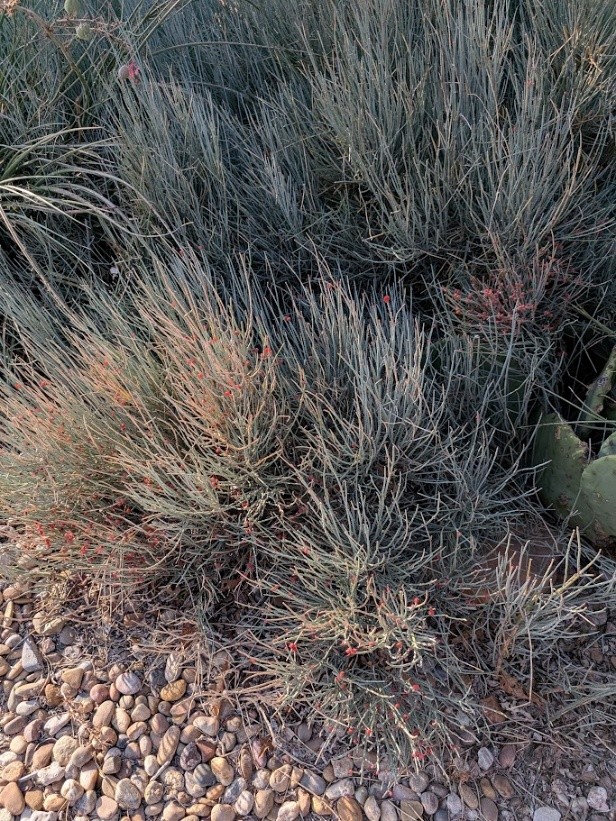
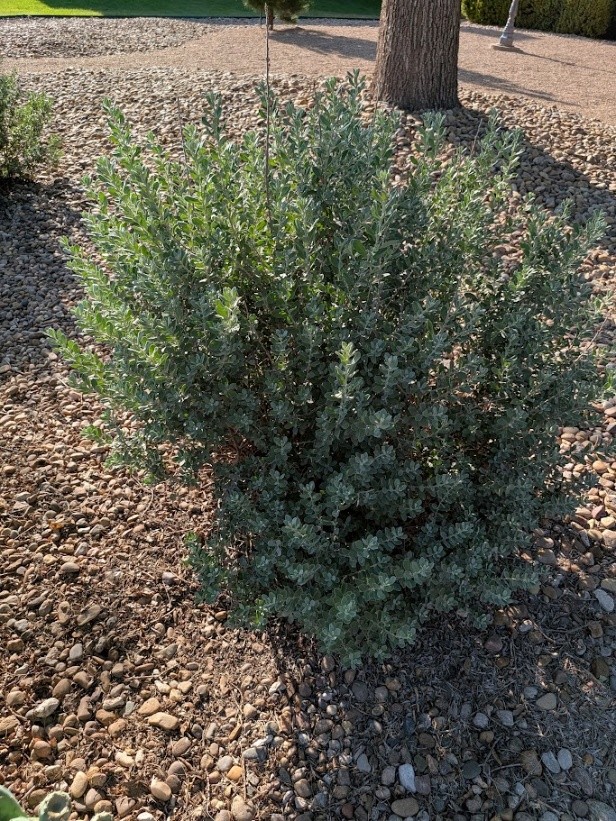
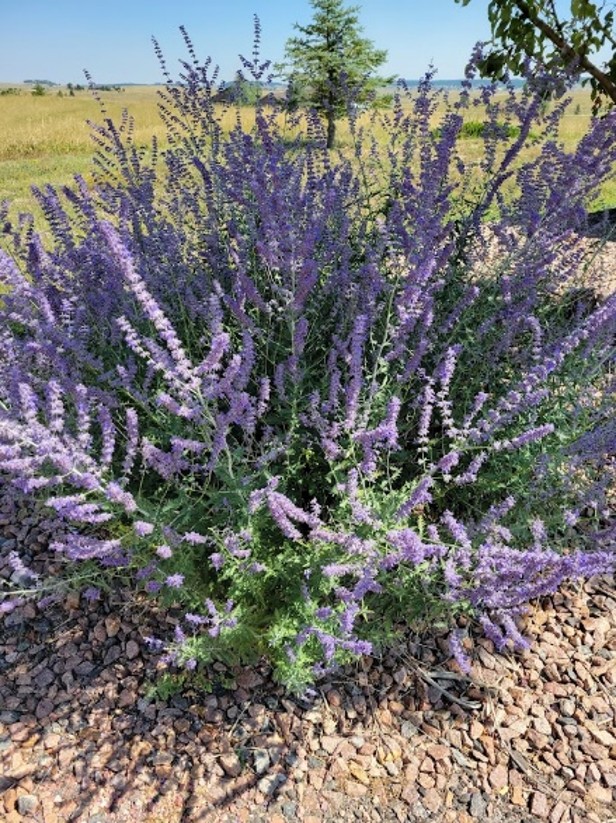
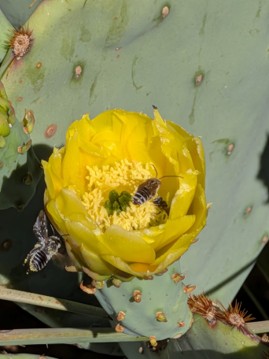
The front yard has been transformed into a xeriscaped garden. Established boxwoods and trees were kept as they can survive primarily on the natural precipitation and runoff from the home and concrete driveway and walkways. Figures 3 and 4 illustrate the use of cacti, yuccas, sage, and ephedra with gravel of two sizes to augment the existing trees and boxwood shrubs. The prickly pear flowers attract honeybees and produce edible fruits. All plantings are sustained solely on natural precipitation.
|
|
Figures 3 and 4: Xeriscaped Yard Adapted to Existing Plants (photos by author) Red Yucca and Prickly Pear in Foreground
Some of the specific plants aside from the common red yucca and prickly pear are highlighted in Figures 5 through 8. All remaining photos are by the author.
|
|
|
|
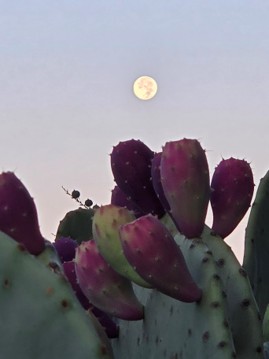
In particular, the sage and cacti attract large numbers of honeybees. The prickly pear produces large amounts of edible fruits in the last summer. Figure 9 shows the typical interaction of the bees with the flowers and Figure 10 shows the cactus fruit. Coincidently, the cactus pads are edible and are tender and thornless when they first emerge from existing pads.
|
|
Most households will use about 50% of all their total water demand for conventional turf lawns and landscaping. How much does water cost for a residence in Canyon, Texas? The minimum cost is $83.25 inclusive of sanitation, sewer, sales taxes, vector control, and up to 2000 gallons of potable water, as stated by the City of Canyon. About 8 inches of water equivalent per month would be needed in the summer months to keep a fescue lawn lush and thriving. Assuming a 2000 ft2 area of lawn, this would be about 1333 ft3 or nearly 10,000 gallons per month. This equates to about $41.34 added to the minimum water bill.
It would be necessary to look at the total excess demand for water for conventional landscaping for an entire year. Assuming that the entire year is six times the max month extra demand, this would be around $250. Xeriscaping costs for Dr. Leitch were about $2000 for that 2000 ft2 of replacement of turf lawn in the front of a home, leaving the back yard with Bermuda grass. Thus, the economic saving has been reached and now exceeded simple payback (excluding inflation) as the installed xeriscaping has now exceeds the required eight years for payback, at nine years since initiation. This is just a simple back-of-the-envelope calculation, but it illustrates that application of xeriscaping has significant cost savings as well as water savings while still providing for a vibrant living landscape for a typical home or business in the Texas Panhandle region.
In conclusion, xeriscaping can be beautiful, requires less maintenance, and can subsist off of natural precipitation alone. Citizens, businesses, and governments can adapt landscaping such that areas that are planted in turf are replaced with native and adapted plants to water, maintenance work (simple weeding and pruning versus frequent mowing and fertilization), and money. Turf can be planted in more water efficient native and adapted grasses such as buffalo grass or Bermuda grass for backyards, schools, and city parks. The current approximately 50% of all domestic water going to landscaping in cities can be significantly reduced to save that water for health and manufacturing uses and to extend the life of water sources such as the Ogallala Aquifer.